Dukes, SG And Kookaburra, Compared Properly
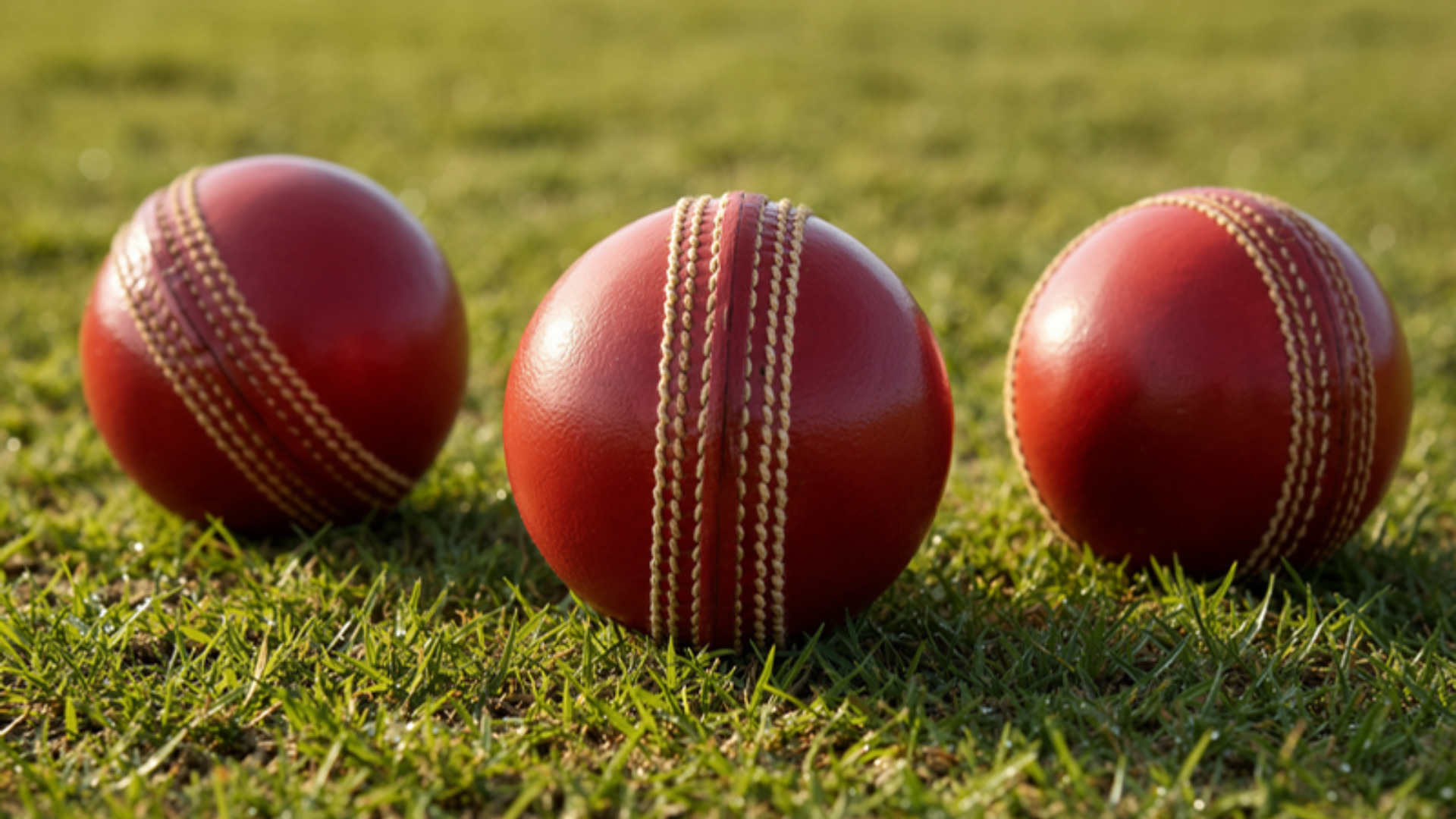
Test cricket is played with three different balls depending on where the match is held, and the differences between them are large enough to explain a good deal of what people put down to pitches or to national temperament.
Who Uses Which
The split is geographic rather than negotiated match by match. India uses SG for home Tests. England, Ireland and the West Indies use Dukes. Every other Test nation uses Kookaburra. All limited overs internationals, wherever they are played, use a white Kookaburra, which is why the one day game is far more consistent across the world than the five day game.
| Ball | Made In | Used For Tests In |
|---|---|---|
| Kookaburra | Australia | Australia, New Zealand, South Africa, Pakistan, Sri Lanka, Bangladesh, Zimbabwe and elsewhere |
| Dukes | England | England, Ireland and the West Indies |
| SG | Meerut, India | India |
The Stitching, Which Is The Whole Story
All three balls have six rows of stitches around the central seam. What differs is how those rows are put in. Dukes and SG are hand stitched in all six rows. Kookaburra hand stitches only the two inner rows and machine stitches the four outer ones.
That single manufacturing difference produces almost everything else. A hand stitched outer row sits proud of the leather, so the seam stands up, stays up and keeps giving the bowler something to grip and something to land on. A machine stitched outer row sits flatter, and flattens further as the ball is hit and thrown, which is why the Kookaburra seam goes soft comparatively early in an innings.
The common shorthand is that Dukes swings and Kookaburra does not. The more accurate version is that Kookaburra swings hard and early and then stops, while Dukes and SG offer less dramatic movement for much longer.
How They Behave Across An Innings
| Overs | Kookaburra | Dukes | SG |
|---|---|---|---|
| 1 to 20 | Pronounced swing | Steady swing and seam | Modest swing, hard |
| 20 to 40 | Softening, seam flattening | Still seaming | Seam still proud |
| 40 to 60 | Little on offer | Movement continues | Grip for spinners |
| 60 to 80 | Soft, batting gets easier | Still usable | Surface worn, spin dominant |
The consequences run through selection. A Kookaburra attack wants genuine pace to make something happen once the swing has gone, which is the route to reverse swing. A Dukes attack can carry a bowler who moves it off the seam at medium pace for forty overs. An SG attack wants spinners, because the pronounced seam gives a finger spinner something to bite on long after the shine has gone.
Materials And Construction
A Dukes ball is always made from four pieces of hand stitched leather. SG and Kookaburra use four pieces for their red Test balls and two pieces for white balls. Ball weight across all three sits between roughly 156 and 163 grams, which is the range the Laws permit.
SG began making cricket balls in 1951 and their Test ball was first used in Tests in 1991, after approval by the Indian board. Dukes send half finished balls to the subcontinent for the stitching work, where the hand skills are concentrated, and finish them in England.
The 2026 Changes To Ball Regulations
The Laws published for the 2026 edition tightened the specification for junior and women’s balls. There are now three defined categories, named Size 1, Size 2 and Size 3, with uniform tolerances across all three. Size 1 is the traditional men’s ball and is unchanged. Size 2 weighs between 142 and 149 grams and measures between 21.5 and 22 centimetres in circumference.
The change came out of an initiative by current and former women’s players, and its effect is consistency: three distinct categories with the same margins, rather than a patchwork of manufacturer specifications. It does not alter anything in the men’s Test game, where the three brand question remains exactly as it was.
Why Nobody Standardises
There is a recurring argument for making one ball mandatory everywhere, usually the Dukes, on the grounds that it gives bowlers a contest for longer. It has never happened, partly because home boards hold the supply contracts and partly because the variety is itself part of what makes touring difficult and therefore part of what makes Test cricket worth watching.
Kookaburra also revised their red ball in late 2020 and early 2021, and Test batting averages have fallen broadly since then, including in countries that do not use a Kookaburra at all. That overlap is a reminder that the ball is one variable among several, alongside the surface, which is covered in the piece on pitch preparation, and the conditions set out in the article on dew.
What Touring Sides Actually Have To Relearn
A bowler arriving in a country that uses a different ball is not learning a new skill so much as unlearning a set of timings. The length that produces an edge with a Dukes is a fraction fuller than the one that works with a Kookaburra, because the Dukes keeps moving later and the Kookaburra does its work earlier and in the air.
Batters have the mirror image of the problem. Against a Kookaburra the first twenty overs are the danger and the rest of the innings gets easier in a fairly predictable way. Against an SG the ball never really stops doing something, so there is no settled period in which a batter can stop concentrating.
The Replacement Ball Problem
When a ball goes out of shape or is lost, the umpires choose a replacement of similar age and condition from a box kept for the purpose. This is the part of the system nobody is happy with, because a replacement that behaves differently from the one it replaced can change a session, and the judgement of what counts as similar is unavoidably rough.
It is not a problem specific to any one brand, though it attracts more attention wherever a ball is going soft early. The underlying variable is how much the surface is abrading the leather, which comes back to the square, and that is covered in the piece on pitch preparation.